


Cricket Australia (CA) will on Tuesday confirm it intends to privatise the Big Bash League, bulldozing through a plan nine months in the making.
Despite strong opposition from NSW and Queensland throughout the process, CA will use Sydney as its location to trumpet the venture, which it hopes will re-shape the sport and bring hundreds of millions of dollars into grassroots cricket and the coffers of players.
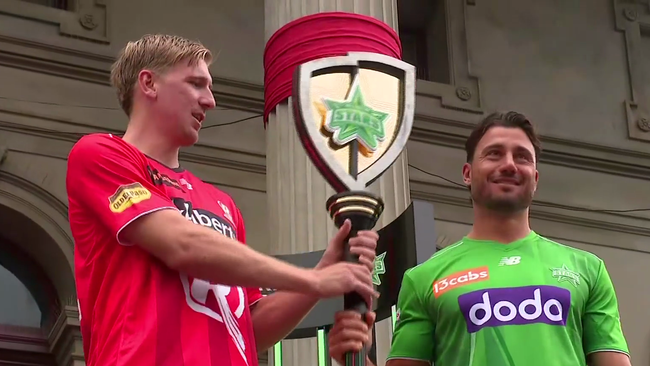
Not only that, in a bid to win over the players amid significant pushback from the Australian Cricketers’ Association (ACA), CA has contacted top level men’s and women’s cricketers to help make the announcement.
Know the news with the 7NEWS app: Download today
The decision to forge on without unanimous approval was given the green light at Monday night’s CA board meeting.
Victoria and Tasmania have been strong believers in a ‘self-determination’ framework, which would allow each state to choose whether to put franchises up for sale, or to wait and see.
If all goes to plan, the Melbourne Renegades will be sold by Christmas. The club is now being administered out of CA’s headquarters, following Cricket Victoria’s early June declaration to merge the two Melbourne franchises, as first reported by SEN and Channel 7.
The merger was then walked back, though there is little doubt now the Stars and the Renegades will look vastly different in 2027/28 to what they have done the last 15 seasons.

The West Australian Cricket Association’s board has not been as united as Victoria’s or Tasmania’s, but they are nevertheless in the ‘yes’ camp.
In part to pay for the redevelopment of the WACA Ground, the all-conquering Perth Scorchers will be floated on the open market following CA’s decision.
This comes despite Justin Langer, a WA legend, voicing his disapproval for privatisation in recent weeks.
South Australia, which proposed the ‘self-determination’ model in the first place, has sat on the fence for much of the process.
The state is the most profitable in the country, with huge crowds flocking to Adelaide Oval for Test and BBL cricket.
SA’s concerns revolved around governance and a suggested tax which would have been placed upon states which refused to sell in the first instance but later backflipped.
The tax was a key reason why Queensland pushed back, and although CA has agreed to a considerable revision – believed to be greater than 50 per cent – it is unclear whether that will be enough to swing Queensland’s perspective.
Queensland isn’t against private money forming the backbone of the BBL, but they believe – and have told CA – that the governing body’s financial forecasts were skewed far too negatively.
Queensland also believes it will be worse off with privatisation, and a lot more worse off without it, meaning they have also grown cranky with CA’s commitment to the process and see this is a lose-lose situation.
The doomsday scenario CA painted if without privatisation has been widely accepted by Victoria, WA and Tasmania and questioned by South Australia.
But in Queensland and NSW, it was flatly rejected. These two states blatantly do not trust CA’s forecasts and believe privatisation should be revisited in 2028 at the end of the current pay deal.
CA argues that will be too late, with the $1.5 billion broadcast rights arrangement due to finish in 2031 and significant money being injected into South Africa’s T20 league.
NSW, which coincidentally held its AGM on Monday night, has pushed back strongest against CA, led by its chairman John Knox and CEO Lee Germon.
Knox and CA chair Mike Baird have endured a testy relationship throughout this process, and despite moments of hope, sources close to the pair agree they are further apart than ever before on privatisation.
Personality clashes – stemming from diametrically opposed philosophies – behind the scenes have become commonplace in recent months.
States and even high ranking CA officials have been happy to speak freely against the other side, frustrated with how things have played out.
For example, the ‘no block’ believes Cricket Victoria CEO Nick Cummins’ initiative to merge the Stars and Renegades was rogue and conducted irresponsibly.
But those in favour of Cummins’ bold play, believe it broke the glass ceiling and allowed CA to get moving on its plan.
Another example relates to CA’s financial forecasts. NSW and QLD believe they have far more astute minds to assess the numbers than CA does. Clearly, CA doesn’t share this view and the notion of ‘ego’ has not gone unnoticed in this back and forth.
Standing in the way is the ACA, which is run by Paul Marsh and faces the stern challenge of bringing all its members under the one banner, despite a variety of views and priorities across the male and female cohorts.
The ACA is not against privatisation, but is adamant the interests of the game must be upheld.
It was CA chief executive Todd Greenberg who signed off on the last MOU, which has been widely critiqued behind the scenes by BBL stars who couldn’t fathom why B-grade internationals were making significantly more money than A-grade Australians.
Greenberg, who preceded Marsh, now has the challenge to work with him on restructuring the pay deal so his grand plan can be executed.
Players currently receive 27.5 per cent of the overall pie, and instead of a sugar hit in the form of a lump sum, Marsh is advocating for this ratio to increase to 33 per cent as part of the privatisation model.
His objective has been flatly rejected by all states, many of whom believe the players will make more money anyway because of privatisation and a jump to 33 percent will take valuable funds away from grassroots cricket.
But without player approval there is no privatisation at all, and that is where the next battle ground is once CA makes its announcement on Tuesday.


